
How AI is Changing Childcare in Bangkok: What Expat Families Need to Know
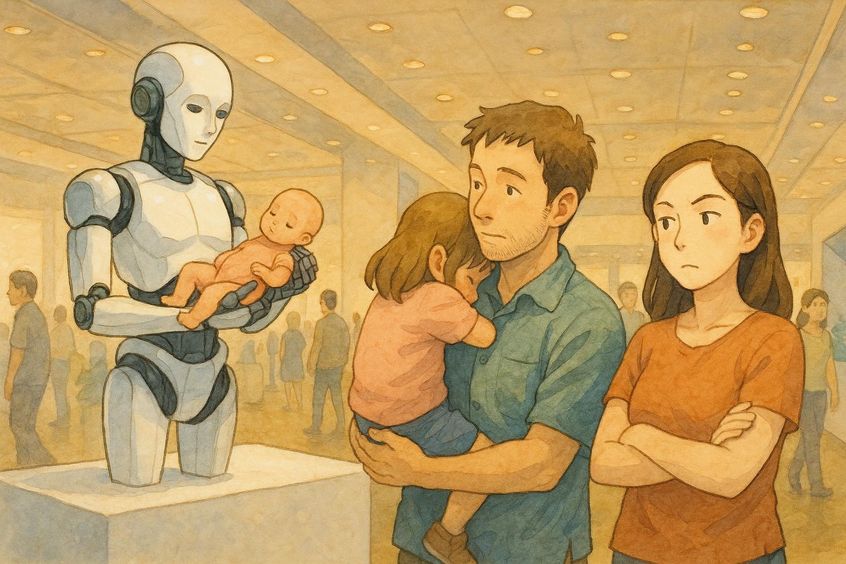
Elon Musk stood on a stage in Austin, Texas, and told a room full of Tesla shareholders that his Optimus robot would babysit their kids. Walk the dog. Teach them things. The crowd applauded. The internet did not.
"I can barely babysit my kid," one parent wrote on Reddit within hours. "Ain't no robot going to uncut a sandwich that was just asked to be cut, nor catch a three-year-old intent on chasing the cat until it eats the pickle."
The comment went viral, not because it was funny (though it was), but because it touched something raw. A nerve that runs through every parent who has ever left their child with someone else and spent the next four hours checking their phone. The question Musk accidentally surfaced wasn't really about robots. It was about trust. About who, or what, we allow into the most intimate spaces of our children's lives. And for the growing community of expat families thinking about AI childcare in Bangkok, that question isn't theoretical. It arrives the moment you unbox a smart baby monitor in your Sukhumvit condo, or the moment your new nanny notices the camera blinking above the playroom door.
The AI in childcare and parenting market is growing at 22.4 percent annually, and it's expected to keep that pace through 2034. But the numbers tell you nothing about what it actually feels like to be a parent in the middle of this shift, caught between the promise of technology and the weight of a human hand on a child's back at three in the morning.
This is the story of that middle ground. And if you're raising kids in Bangkok right now, you're already standing in it.
The Rise of AI in Childcare — Why Bangkok Families Should Pay Attention
Li Linyun is a full-time mother in Hunan, China, and she was losing her mind over homework. Every evening, the same ritual: her ten-year-old daughter would sit at the kitchen table, Li would sit beside her, and within twenty minutes they'd be fighting. Not about math. About everything math had come to represent.
How AI Chatbots Are Changing the Parent-Child Dynamic

Then Li discovered Doubao, ByteDance's AI chatbot, and did something that felt radical: she stepped back. Doubao became what Li calls "a 24-hour online teacher that's knowledgeable and extremely patient." Her daughter points the phone camera at a completed worksheet; the AI grades it, explains the errors, walks through the logic again. "I feel it explains things in more detail, so I can understand," the daughter says.
The twist nobody expected? Their relationship got better. "You really can't spend too much time on homework if you want to improve the parent-child relationship," Li explains. She'd been pouring her energy into the wrong vessel. The AI didn't replace her as a mother. It replaced her as a drill sergeant, a role she'd never wanted in the first place.
Over ninety percent of Chinese respondents in a recent KPMG global survey expressed optimism about AI, compared to just over fifty percent in the United States. Cultural context matters. But Li's story resonates beyond China because every parent recognizes the shape of it: the guilt of not being patient enough, the relief when something absorbs the friction so you can go back to just being a parent.
Why Technology Childcare Is Booming in Bangkok
In Bangkok, the village looks different than most places on earth. It's a city where a full-time nanny costs around fifteen to eighteen thousand baht a month, where expat families find caregivers through Facebook groups and word-of-mouth recommendations in coffee shops near international schools, and where the technology childcare scene is evolving faster than most parents realize. AIS, one of Thailand's largest telecoms, now markets an AI-powered camera called AiCAM that can detect when a child climbs furniture, gets out of bed at night, or plays near a dangerous area. It's not a prototype. It's on Lazada for a few thousand baht. And it's selling.
But the families buying these devices aren't doing it because they love technology. They're doing it because they're afraid. Afraid of the story from the Bay Area that circulated through every expat parent group last year, the one where a two-day-old infant was filmed being struck, shaken, and thrown across a room by a nanny. The parents said the footage was "so graphic it cannot be shown on television." Without the camera, they would never have known.
That story changed something. It moved the conversation from "Should we monitor our nanny?" to "Can we afford not to?" And it left families with a new kind of guilt, not the guilt of surveillance, but the guilt of what might happen without it.
Smart Baby Monitors: AI-Powered Eyes on Your Little One
A Japanese mother living in a two-story house bought a CuboAi smart baby monitor for a reason that had nothing to do with artificial intelligence. Her infant had started rolling over but couldn't roll back. Every night, she'd lie awake on the second floor, listening for sounds that might mean her daughter was face-down and struggling. The monitor's AI face-recognition alarm changed that equation. "Considering we bought peace of mind," she wrote in a review, "it was a very good purchase."
What the Data Says About AI Baby Monitors in 2026

Peace of mind. That's what every smart baby monitor AI promises, and the data suggests many of them deliver, at least partially. A study of nearly 47,500 newborns found that ninety-four percent of parents using the Owlet Smart Sock Monitor reported improved sleep quality. A separate study of 257 Japanese mothers with infants showed that smart devices measurably reduced parenting anxiety. Eighty-four percent of users of the Ellie baby monitor said the device "calmed their parental anxiety."
These are not small numbers. They represent tens of thousands of parents who slept better, worried less, and had more energy for the parts of parenting that actually matter.
When Smart Monitors Make Anxiety Worse
But here's where the story folds in on itself. The Washington Post investigated AI baby monitors and found something counterintuitive: for some parents, the technology didn't reduce anxiety. It made it worse. The constant stream of data, heart rate, oxygen levels, breathing patterns, created a new kind of vigilance. Parents who might have glanced at a sleeping baby and gone back to bed were now staring at graphs on their phones, interpreting every dip as a potential emergency. "We have the technology to do this kind of constant surveillance and hyper-monitoring," the Post reported, "but it's driving parents insane."
Dr. Helen Ball of Durham University put it more bluntly: "For the first few months, infants rely primarily on physical contact and proximity. I would encourage parents to keep their baby close and monitor their baby directly using their own senses."
Consumer Reports added another wrinkle, warning that AI features in baby monitors "could alarm parents with false positives or fail to provide the proactive alerts that may be promised." The technology is caught in a paradox: it solves the problem of not knowing, but it creates the problem of knowing too much.
Nanny Monitoring and Thailand's Privacy Laws
For expat families in Bangkok, this paradox has a local texture. Thailand's Personal Data Protection Act, effective since June 2022, requires disclosure of surveillance. Even in your own home, the legal terrain around recording a nanny is grayer than most parents assume. The Japanese babysitter matching service Kidsline, popular among Bangkok's Japanese expat community, explicitly requires families to disclose monitoring cameras before bookings. The message is clear: cameras are expected, but secrecy is not.
And yet, viral nanny abuse footage regularly surfaces on Thai social media, and each clip reinforces the same brutal logic: better to watch and know than to trust and hope. The cultural acceptance of home surveillance cameras in Thailand is arguably higher than anywhere in the West. The AI baby monitor in a Bangkok nursery isn't an anomaly. It's becoming furniture.
What nobody talks about is what happens to the relationship between parent and caregiver when a camera sits between them. A nanny who knows she's being watched performs being a nanny. A parent who watches all day performs being in control. Neither performance is the real thing. And somewhere in that gap, between the watched and the watching, the child grows up in a house where trust has been outsourced to a blinking LED on the ceiling.
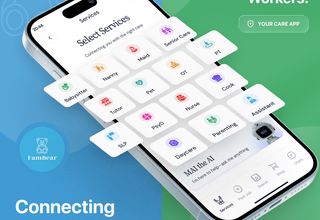
This is why families who invest time in properly vetting their caregivers upfront tend to report less anxiety down the line, camera or no camera. Platforms like FamBear that test caregivers on actual childcare skills before matching, assessing how a nanny handles real scenarios rather than just checking references, tend to produce placements where the camera becomes a safety net rather than a crutch. The difference is subtle but enormous: watching because you want to, versus watching because you're afraid to stop.
AI Nanny Tools: How Technology Helps Caregivers Do Better
Zheng Wenqi is a forty-two-year-old PR professional in northern China, and she solved a problem that stumps most bilingual families with a device that looks faintly ridiculous: a wearable AI translation mask. She speaks Chinese into it. A speaker outputs English. After one month, her nine-year-old son was confidently speaking English. Her five-year-old daughter, who had zero prior English exposure, began describing daily activities in a language her mother barely speaks.
AI-Powered Language and Development Tools
The device costs about 2,500 RMB, roughly 12,500 baht, and it represents something bigger than language learning. It represents the moment when AI stops being a monitor and starts being a tool. Not watching your child, but actually teaching alongside them.
This is the shift that matters for Bangkok families, where the nanny often speaks Thai, the parents speak English (or German, or Japanese, or Mandarin), and the child is trying to make sense of all of it. AI-powered translation apps, AI child development tracking tools, and activity planning systems are beginning to change what an AI nanny means in practice. Not a robot in the living room, but a layer of intelligence that helps human caregivers do their jobs more effectively.
Why Human Judgment Still Leads
A parenting coach named Claudia Hoetzel captured the balance well: "When time or energy is insufficient, AI is a convenient way to get basic information, but it cannot replace experience, intuition, or professional support." Parents using ChatGPT for meal planning, she observed, adjust the suggestions based on their child's actual taste preferences rather than accepting recommendations wholesale. The AI proposes. The human disposes.
The same principle applies to AI child development tracking. Smart devices can log sleep patterns, feeding schedules, and milestone data with a precision no human notebook can match. But the interpretation, the moment when a caregiver notices that a toddler's mood shifts every Tuesday when dad travels for work, that remains stubbornly, beautifully human.
Robot Babysitters: Science Fiction or Bangkok Reality?
Let's return to Elon Musk's stage for a moment, because what happened after his announcement tells us more than the announcement itself.
"I would likely buy an Optimus robot to mow my lawn and do laundry," one parent wrote. "But I would 'never' leave it alone with my children, no more than I would allow my Full Self-Driving Tesla drive my kids to school today."
That word, "never," appeared in quotes, as if the parent needed punctuation to carry the weight of conviction. And the analogy to FSD was pointed: if you wouldn't trust the company's driving AI with your children's bodies, why would you trust its walking AI with your children's minds?
Another commenter was less diplomatic: "Children need human connection for proper development. Robot babysitters are a stupid idea." Someone else added, with the dark humor that parenthood breeds: "He probably meant it would take over the kind of parenting he did."
The backlash was so universal that TechRadar ran a headline that could have been a bumper sticker: "Sorry, Elon, nobody wants your robot babysitting their kids."
The Robot Babysitter Is Being Built — Piece by Piece
But here's the thing about the future: it doesn't arrive all at once. It seeps in. In South Korea, the government is already deploying AI childcare robots to underserved rural areas experiencing population decline and caregiver shortages. The Chosun Ilbo, one of Korea's largest newspapers, ran a feature on AI-powered smart beds, diapers, and strollers, what they called the "remarkable AI nanny." A Chinese startup called UniWhale launched a wearable device that predicts a baby's crying, customizes lullabies, and monitors sleep, branding it a "generative AI nanny." And right here in Bangkok, Cloud 9 Care 4 Kids operates an after-hours babysitting center that advertises "AI Powered Monitoring."
The robot babysitter isn't here yet. But its pieces are. The smart crib that rocks itself when it detects fussing. The camera that distinguishes between a cry of hunger and a cry of pain. The app that generates a developmental report and emails it to a pediatrician. Each piece, individually, seems reasonable. Helpful, even. It's only when you step back and see them assembled that you realize the robot babysitter isn't being built in a factory. It's being built in your home, one device at a time.
A Reddit user on r/robotics proposed what might be the only honest framework for thinking about this: "Robots babysitting kids is fine but only for short diversions used moderately and the parent nearby and ready to take over at a moment's notice. Sort of like a seven-year-old babysitting while the mom takes a phone call."
Sort of like a seven-year-old. That's the level of trust we're working with. And honestly? That might be exactly right.
Smart Home Child Safety in Bangkok
The anxiety around technology and children isn't just about monitors and robots. It's about the invisible architecture of data that builds up around a child who has never consented to being watched, tracked, and analyzed.
Privacy Risks and Data Collection Concerns
Alan Butler of the Electronic Privacy Information Center has warned that AI-powered children's toys routinely skirt COPPA regulations: "There's a lot of toys on the market using AI and there's a need to ensure they're all complying." A WIRED investigation argued that parenting tech feeds into a broader surveillance culture, from nanny cams to Ring doorbells to neighborhood apps, creating what researchers call a "total system" of surveillant care.
German children's rights organization Humanium published a thorough analysis of emotional AI toys, raising concerns about devices that manipulate children's emotions while collecting data from minors who cannot give informed consent. The smart home child safety question isn't just "Is my child safe from physical harm?" It's also "Is my child safe from the device that's supposed to keep them safe?"
The Bangkok Surveillance Landscape
In Bangkok, where budget AI cameras from brands like Hikvision flood Lazada at prices starting around five hundred baht, the barrier to entry for home surveillance is almost nonexistent. Thailand's PDPA requires signage for cameras visible to the public, even dash cams technically need stickers, but enforcement inside private homes remains murky. The result is a city where nearly every expat family with young children has at least one camera pointed at their living room, and almost nobody has thought carefully about what happens to that footage.
Li Linyun, the Chinese mother who delegated homework to Doubao, shrugged off privacy concerns entirely: "I don't think we have much privacy in the social media era." It's a position that over ninety percent of Chinese respondents share, according to the KPMG survey. But expat families in Bangkok come from everywhere, from privacy-conscious Germany and Australia to surveillance-normalized Singapore and China, and their comfort levels diverge wildly.
When Human Negotiation Beats Any Algorithm
This is where the human element reasserts itself. No algorithm can handle the cultural negotiation between a German father who believes in data minimalism and a Thai grandmother who wants to video-call the baby every afternoon. No smart home system can resolve the tension between an American mother's instinct to monitor and a Danish father's philosophy of free-range childhood. These are human problems, and they require human solutions: conversations, compromises, the slow work of building trust between people rather than between devices.
And this, I think, is what makes finding the right caregiver more important than finding the right camera. A nanny who understands your family's values, who gets why you don't want the iPad on during meals, or why you do, is worth more than any amount of AI monitoring. Services like FamBear that focus on skill-based assessment rather than algorithmic matching understand this: the best childcare technology in the world is a caregiver who doesn't need to be watched. If you're looking for a babysitter service in Bangkok that prioritizes human quality over algorithmic convenience, that distinction matters.
The Question That Won't Go Away
The self-identified data scientist on r/Nanny said it most clearly: "Artificial intelligence is still not to the point where it has the ability to process information the way humans can. Artificial intelligence relies on algorithms and finding patterns."
She wasn't being a technophobe. She was being precise. AI excels at pattern recognition: detecting a face buried in a pillow, flagging an unusual breathing rhythm, noticing that a child's sleep has deteriorated over the past week. These are genuine, life-improving, occasionally life-saving capabilities. But childcare isn't primarily about pattern recognition. It's about the unpattern, the moment a toddler does something she's never done before, the instant a child's face shifts in a way no dataset could predict, the afternoon when everything is wrong and nobody can explain why except the nanny who has been watching, really watching, with human eyes and a human heart, for the past six months.
Professor Noel Sharkey, one of the world's foremost experts on robot ethics, has argued that robots fundamentally "lack the sensitivity and understanding essential for childcare." Not because the technology is immature, but because sensitivity and understanding are not computational problems. They are relational ones. They emerge between people, not from processors.
And yet. The Korean government deploys AI childcare robots because there aren't enough humans. Chinese mothers hand their children's education to chatbots because the alternative is screaming matches that corrode the family. Thai parents install cameras because a two-day-old baby was thrown across a room. The AI nanny isn't arriving because people want it. It's arriving because the world has made it necessary.
For expat families in Bangkok, stretched between cultures, languages, and the particular loneliness of raising children far from home, the answer isn't to choose between technology and humanity. It's to use each for what it does best. Let the AI monitor the breathing. Let the smart camera watch the stairs. Let the translation app bridge the gap between your child's Thai and your English. But when it comes to the core of childcare, the holding and the knowing and the being there at 2 a.m. when nothing is wrong but everything feels wrong, find a trusted nanny in Bangkok who brings something no device can replicate.
Musk's Optimus robot will eventually walk into someone's home. It might even hold a baby. But it will never know what it's holding.
And that, in the end, is everything.
FAQ — AI Childcare in Bangkok
Can AI replace babysitters and nannies?
No. AI tools like smart monitors, translation apps, and development trackers are powerful supplements, but they cannot replace the emotional intelligence, physical responsiveness, and relational sensitivity that human caregivers provide. Professor Noel Sharkey, a leading robot ethics expert, argues that robots fundamentally "lack the sensitivity and understanding essential for childcare." The best approach is combining AI tools for monitoring and data with a trusted human caregiver for hands-on care.
What are the best AI baby monitors in 2026?
Top AI baby monitors include CuboAi (AI face-recognition alerts for covered faces and rolling), Owlet Smart Sock (heart rate and oxygen monitoring), and Ellie Hello (anxiety-reducing sleep tracking). In Thailand, AIS AiCAM offers local AI-powered monitoring that detects furniture climbing and dangerous play areas, available on Lazada. Choose based on your priority: sleep data (Owlet), face detection (CuboAi), or a budget-friendly local option (AIS AiCAM).
Is it safe to use AI to monitor my child?
AI baby monitors are generally safe and can improve parental sleep quality — 94% of Owlet users reported better sleep. However, Consumer Reports warns about false positives, and the Washington Post found that constant data streams can increase anxiety for some parents. For privacy, Thailand's PDPA requires disclosure of surveillance cameras. Choose reputable brands with encrypted data transmission, and remember that monitoring should complement — not replace — direct parental attention.
How is artificial intelligence used in early childhood education?
AI is used in early childhood education through adaptive learning apps, AI tutoring chatbots (like ByteDance's Doubao), language translation tools for bilingual households, and development milestone tracking. In Bangkok, AI translation devices help bridge Thai-English language gaps between caregivers and children. AI tools excel at patient, repetitive instruction — freeing parents and caregivers to focus on creative play, emotional support, and relationship building.
What are the risks of AI in childcare?
Key risks include data privacy concerns (AI toys may collect children's data without proper consent), over-reliance on technology reducing human interaction, false positives from monitors causing unnecessary anxiety, and the erosion of trust between parents and caregivers when surveillance replaces communication. The Electronic Privacy Information Center warns that many AI children's toys don't comply with data protection regulations. Balance AI tools with human judgment and open communication with your caregiver.
Are robot babysitters real?
Fully autonomous robot babysitters don't exist yet, despite Elon Musk's claims about Tesla's Optimus robot. However, components of robotic childcare are already in use: South Korea deploys AI childcare robots in rural areas, smart cribs auto-rock fussy babies, and AI cameras distinguish between types of crying. In Bangkok, Cloud 9 Care 4 Kids uses AI-powered monitoring in their babysitting center. The consensus among parents and experts: robots may assist caregivers but are far from replacing them.